Vehicles without valid PUC will no longer be provided fuel in Delhi: CM Gupta
CM Gupta said that the move was necessary to tackle the challenge of air pollution.
At CAQM special panel meet, Suzuki, Toyota, Nissan and Hyundai voiced opposition to any mandatory shift to zero emission vehicles; JSW MG Motor, Ather Energy, Ola Electric and Montra Electric were supportive of the transition; Tata Motors, Mahindra & Mahindra, and TVS Motor remained broadly neutral.




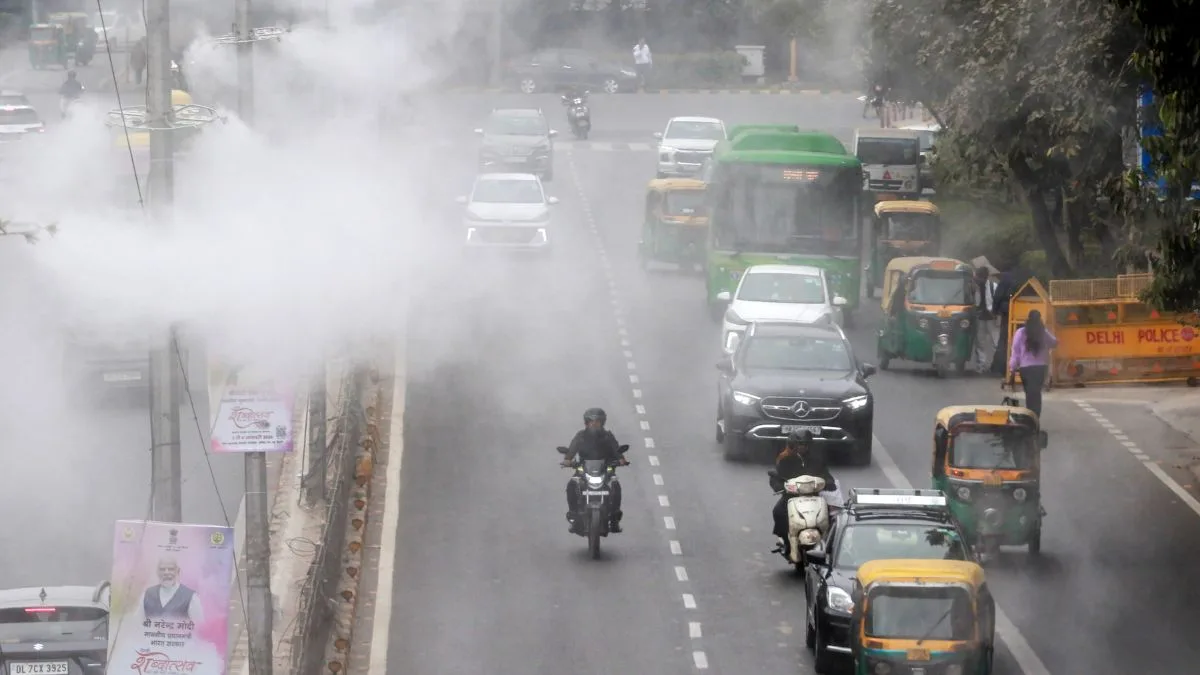
File Photo: IANS
A recent consultation convened by the Commission for Air Quality Management (CAQM) on February 27 has brought to light a widening divide within the auto industry over a potential shift toward Zero Tailpipe Emission (ZTE) vehicles in Delhi-NCR.
As per several participants, during the consultation, professor Ashok Jhunjhunwala of IIT Madras, Chairperson of CAQM Expert Committee mandated to draw a blueprint to curb emission levels in Delhi-NCR, conveyed to vehicle manufacturers that the broader intent under consideration is to progressively shift all new vehicle registrations in the Capital and surrounding areas toward Zero Tailpipe Emission vehicles in the coming years.
Advertisement
Manufacturers would retain flexibility in technology choice, including Battery Electric Vehicles (BEVs), Hydrogen Fuel Cell Electric Vehicles (FCEVs), or other qualifying zero-emission technologies.
Advertisement
According to participants present, representatives from companies such as Suzuki, Toyota, Nissan and Hyundai voiced opposition to any mandatory shift to ZTE vehicles, instead advocating for the inclusion of lower-emitting technologies as part of the transition pathway.
Industry observers note that some of these manufacturers currently have limited zero tailpipe emission offerings in the Indian market, which may be influencing their position.
On the other hand, companies including JSW MG Motor, Ather Energy, Ola Electric and Montra Electric were supportive of the transition, with some advocating a clearer and time-bound roadmap.
Tata Motors, Mahindra & Mahindra, and TVS Motor were described by participants as broadly neutral in their interventions.
Broadly, the discussions reflected a noticeable pattern: several foreign-origin manufacturers expressed reservations about transition to battery electric vehicles (BEV), while a number of Indian manufacturers were either supportive or open to a phased shift. The divide highlights differing strategic calculations as India’s mobility market evolves under tightening air quality and climate considerations.
As Delhi-NCR continues to grapple with severe air pollution, the regulatory direction taken by CAQM could shape both environmental outcomes and competitive dynamics within the automotive sector.
The final decision now rests with the Commission. At its core, the policy question remains straightforward: whether accelerating the shift toward vehicles without tailpipe emissions provides a clearer pathway to improving urban air quality compared to continuing reliance on vehicles that emit pollutants directly on city roads.
Advertisement